
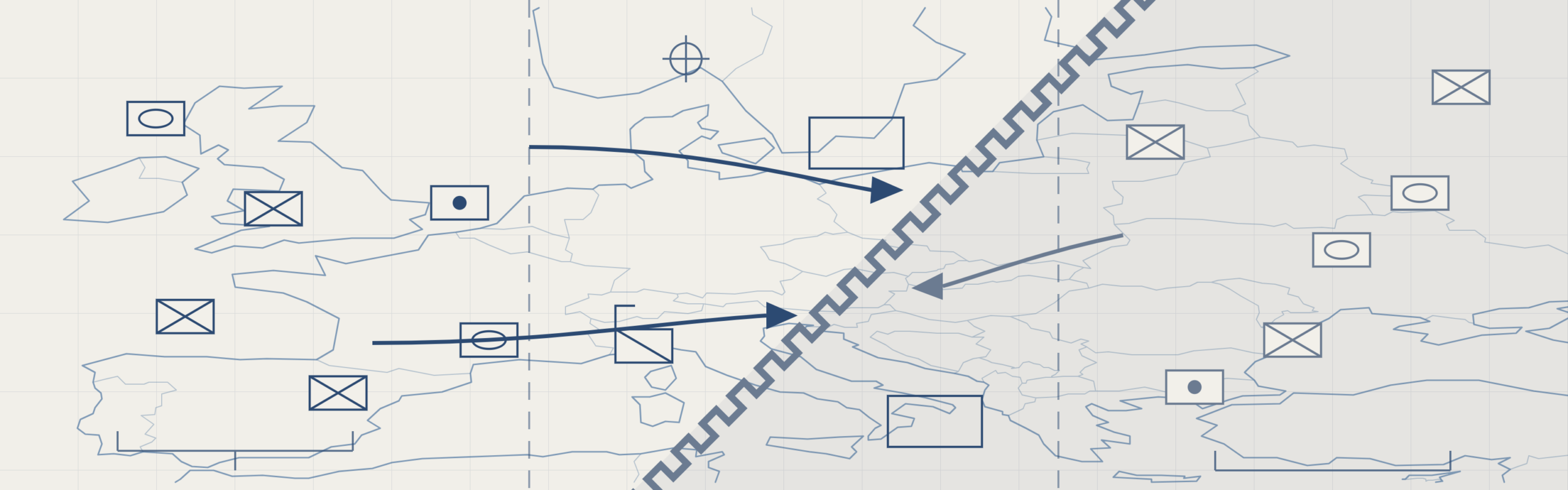
Shared strength in peace, crisis and war
Total defence means that Germany’s security is not a purely military task. It is a whole-of-government mission that concerns the federal government, the federal states, local authorities, business, organisations and civil society alike.
The concept of total defence brings together all civilian and military measures that serve national and collective defence . It was first developed during the Cold War and, in view of current threats – from Russia’s war of aggression to hybrid operations – is undergoing a strategic revival and a shift in emphasis.
The aim of total defence
The aim is to make the state and society fit for crisis and war – through resilience at home and deterrence abroad. It ensures:
- the functioning of state structures,
- the supply of the population,
- the military freedom of operation at home,
- and the protection of critical infrastructure.
As a “hub” and “Host Nation“ within NATO , Germany bears particular responsibility: troops must be deployed, the wounded cared for and supply chains secured – under the real conditions of a hybrid battlefield that has long since extended to information spaces and social cohesion.
Civilian and military – inseparable
The total defence diagram (see above) makes it clear: this is not just about tanks and barracks. Civil defence – such as civil protection, supplies and maintaining state functions – is just as central as military defence. Both areas are organisationally independent, but they still have to work in a closely interlinked way .

Key areas of responsibility
Civil defence
- Maintaining state and government functions
- Civil protection and disaster relief
- Secure supply of electricity, water, food and medicines
- Support for military operations
Military defence
- National territorial defence
- Germany as an operational base
- Collective defence at home and in the area of operations
- Integration into NATO command structures
The lesson: defence begins at home
The new understanding of security demands that the foundations are laid not once war breaks out, but already in peacetime. Resilient state structures, prepared administrations, efficient infrastructure, capable reserve structures and a resilient civil society ready to defend itself form the backbone of total defence.
This includes:
- Regular civil-military exercises
- Crisis management teams capable of coordination
- A comprehensive situation picture of Germany as a basis for decision-making
Defence involves the whole of society
Without the involvement of society as a whole, every plan – including OPLAN DEU – – remains a conceptual framework without the power to be implemented. Total defence can only work once cities, businesses, care facilities, media organisations and citizens are prepared.
The Bundeswehr cannot defend Germany on its own. That is why we need robust civilian infrastructure, a clear understanding of roles, trustworthy communication – and a shared awareness that security is a task for all of us.
Shared responsibility – in practice
Total defence is not just a strategic concept but an operational mandate for every level of society. This means that the private sector, local authorities and the civilian population also bear responsibility – not as bystanders, but as load-bearing pillars of a resilient Germany.

For businesses
Staying operational
Businesses are not just affected by crises – they are crucial to overcoming them. Supply chains, logistics, energy supply and IT security can only be maintained if businesses are prepared.
Example
If, in a state of defence , a large share of care staff, lorry drivers or IT specialists are lost to reserve duty, evacuation or infrastructure failure, supply grinds to a halt. Responsibility for protective measures – such as securing buildings, backup power or replacement staff – lies not with the military but with the businesses themselves. Protecting critical infrastructure is a civilian duty.

For local authorities
Close to people – crucial in a crisis
Local authorities are people’s first point of contact with the state – in a crisis more than ever. They organise evacuations, emergency shelters, water supply and disaster relief. Yet so far, structures vary widely from region to region.
Example
In one federal state the siren warning system is well developed; in another there are no emergency plans for power cuts. Federalism leads to different approaches and rules – which makes each local authority all the more responsible for putting structures in place early, so it can still act when state authorities are overstretched.

For citizens
Think ahead, pitch in, take part
The public is not merely on the receiving end of state protection – it is part of the security system. Anyone who knows what to do in a crisis can then help their neighbours too – and so strengthens the whole country.
Example
If electricity, water or the internet go down, nobody can count on the military or the authorities to help straight away. Preparing with supplies, neighbourhood networks or alternative sources of information builds staying power – and takes pressure off the emergency services.

Further information
Here you will find a collection of sources, documents and further information on OPLAN and the state of defence.